TopicsDoubts
Book coming soon

Honest questions are the doorway to revelation — not the proof of its absence.

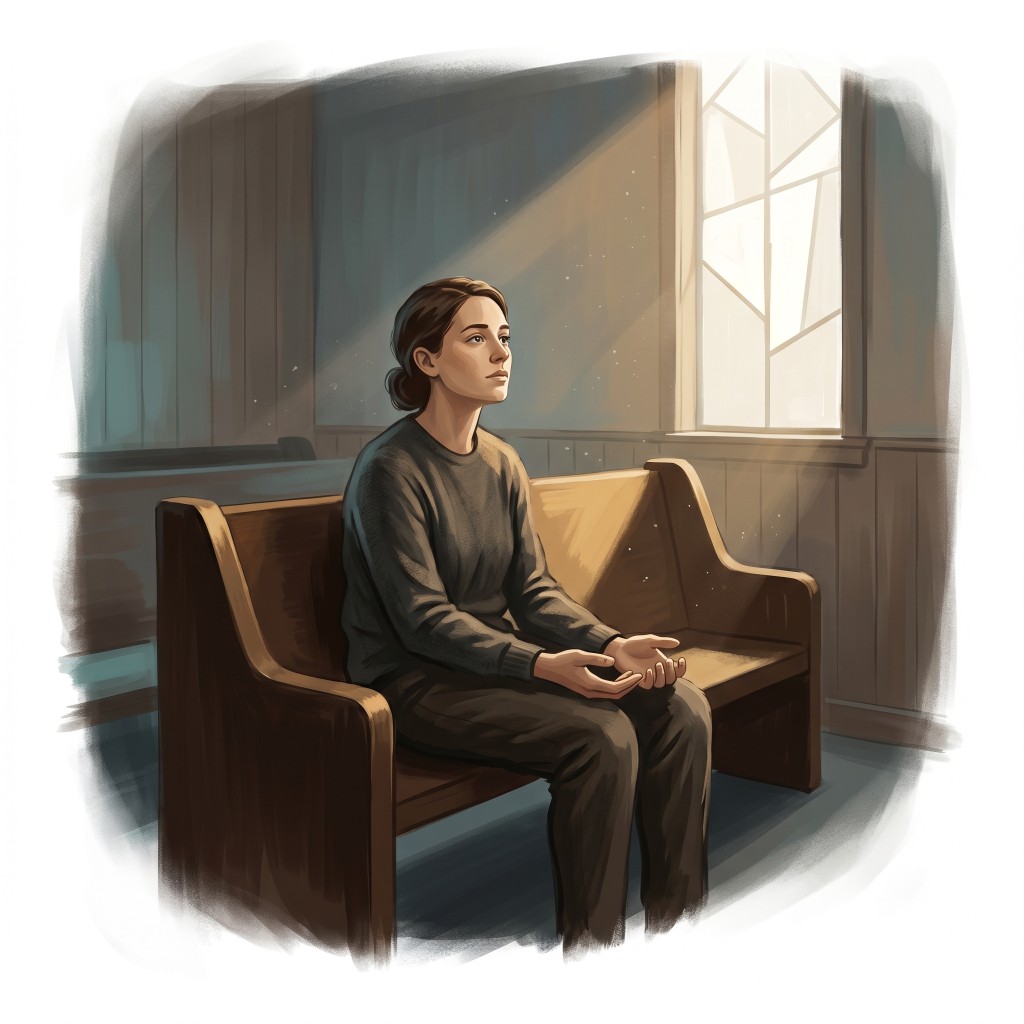
A young person sitting on a chapel bench at dusk, light coming in slanted through the window.

Shame's Lie versus God's Thoughts

Shame's Lie

If I had real faith, I wouldn't have this question. Having it means I'm slipping.

God's Thoughts

God answered Joseph's first honest question with a vision. He answered Thomas's with His own scarred hand. The opposite of faith isn't doubt — it's the refusal to keep asking.

Watch these

Lord, I Believe

Elder Jeffrey R. Holland

The single most pastoral talk on this subject in modern Conference history. Holland walks through the father's "Lord, I believe; help thou mine unbelief" and tells doubters to be candid about their questions but patient with the Church as they work through them. Partial faith is faith.

Faith Is Not by Chance, but by Choice

Elder Neil L. Andersen

Andersen draws the line between faith as wishful feeling and faith as a deliberate, returnable choice. "Faith never demands an answer to every question but seeks the assurance and courage to move forward." He grants questions are normal and that the move toward faith is active, not passive.

The contrary

Both of these are in your scriptures. Both are true.

"Doubt not, fear not."

— D&C 6:36

"If any of you lack wisdom, let him ask of God, that giveth to all men liberally, and upbraideth not; and it shall be given him."

— James 1:5

Prophet voices

"My dear brothers and sisters — my dear friends — please, first doubt your doubts before you doubt your faith. We must never allow doubt to hold us prisoner from the joys of love, service, and faith that come from believing."

— President Dieter F. UchtdorfCome, Join with Us, October 2013 General Conference

"When problems come and questions arise, do not start your quest for faith by saying how much you do not have, leading as it were with your "unbelief." That is like trying to stuff a turkey through the beak! Let me suggest that you start with what you do believe and let that faith be as fully employed as possible."

— Elder Jeffrey R. HollandLord, I Believe, April 2013 General Conference

"Faith never demands an answer to every question but seeks the assurance and courage to move forward, sometimes acknowledging, "I don't know everything, but I do know enough to continue on the path of discipleship.""

— Elder Neil L. AndersenFaith Is Not by Chance, but by Choice, October 2015 General Conference

More than one side of the same God

The Restoration began with a doubt.

Joseph Smith was fourteen and confused. Different ministers were saying different things and quoting the same Bible to do it. "What is to be done?" he wrote. "Who of all these parties are right; or, are they all wrong together?" (Joseph Smith—History 1:10). He read James 1:5. He went into the woods. He asked. The Father and the Son appeared. The single greatest event of the modern dispensation happened because a teenager was honest about not knowing. The Restoration is not the reward for never doubting. It is the result of one honest question.

Joseph Smith—History 1:5–20

Read more from the bookFull scenario, scripture, and the both-are-good frame

Both are good

Faith that holds.

Hebrews 11:1

Questions that seek.

D&C 9:7–8

Read the moment

A returned missionary, three years home, picks up a podcast on a long drive and hears something about Church history he was never taught and can't immediately reconcile. He gets home and can't sleep. He doesn't tell his wife. He doesn't tell his bishop. He sits in sacrament meeting the next Sunday and looks around at people who seem to have no questions and feels like a fraud for being there. The voice in his head says: good members don't have this problem. If you're asking, you're already gone. He's not gone. He's doing what Joseph Smith did in 1820. He has hit the edge of what he was taught and is trying to figure out what to do next. The shame is the danger — not the question. The shame says hide it. Hidden questions calcify into resentment. Asked questions calcify into testimony. The same question, asked out loud, becomes the doorway. Kept secret, becomes the wall.

"If any of you lack wisdom, let him ask of God, that giveth to all men liberally, and upbraideth not; and it shall be given him."

— James 1:5

God's Example

Thomas got proof — not a lecture.

For a week after the resurrection, the disciples kept telling Thomas they had seen the risen Lord. He said he would not believe until he could see the wounds himself and put his finger in them. A week later, Christ appeared and said, "Reach hither thy finger, and behold my hands; and reach hither thy hand, and thrust it into my side: and be not faithless, but believing" (John 20:27). He did not shame Thomas. He did not say "why are you like this?" He showed up. He answered the exact question. He gave the exact evidence Thomas had said he needed. Then He said, "Be not faithless." The order matters: evidence first, invitation second. God is not afraid of your honest question. He is the one who asked you to ask.

John 20:24–29

Bridle it: right time, right place, right person, right reason.

God doesn't approve of either extreme

This is not an excuse. God wants both — faith that anchors and questions that seek. Bridle this.

Doubt as a permanent identity

When "questioning" becomes a permanent posture — when no answer is allowed to be the answer because the role of "the one who has questions" has become an identity — the question stops doing what scripture's questions do. The Restoration's questions moved. Joseph asked, then he listened, then he acted. Doubt that loops back to itself, refuses every answer, and treats the pose as the prize is not honest inquiry.

"And whosoever will harden his heart and will not exercise their faith to repent, the same shall not be visited by the Spirit."

— Alma 12:11

Refusing to ever ask

Refuse to ever ask? You will mistake your hand-me-down testimony for your own and watch it shatter the first time it meets a real challenge. The disciple who never asks isn't faithful — they're untested. Joseph Smith was not the kind of believer who never had a question. He was the kind who took every question to God.

"Seek learning, even by study and also by faith."

— D&C 88:118

Take the bread. Take the water. Adjust. Come back.
Hand this to someone.

Two Are True is a small, gift-able book — designed to be opened to any page and read in under a minute. Send a copy. Leave one in a bathroom. Give one to a teenager.

Get the book — coming soon