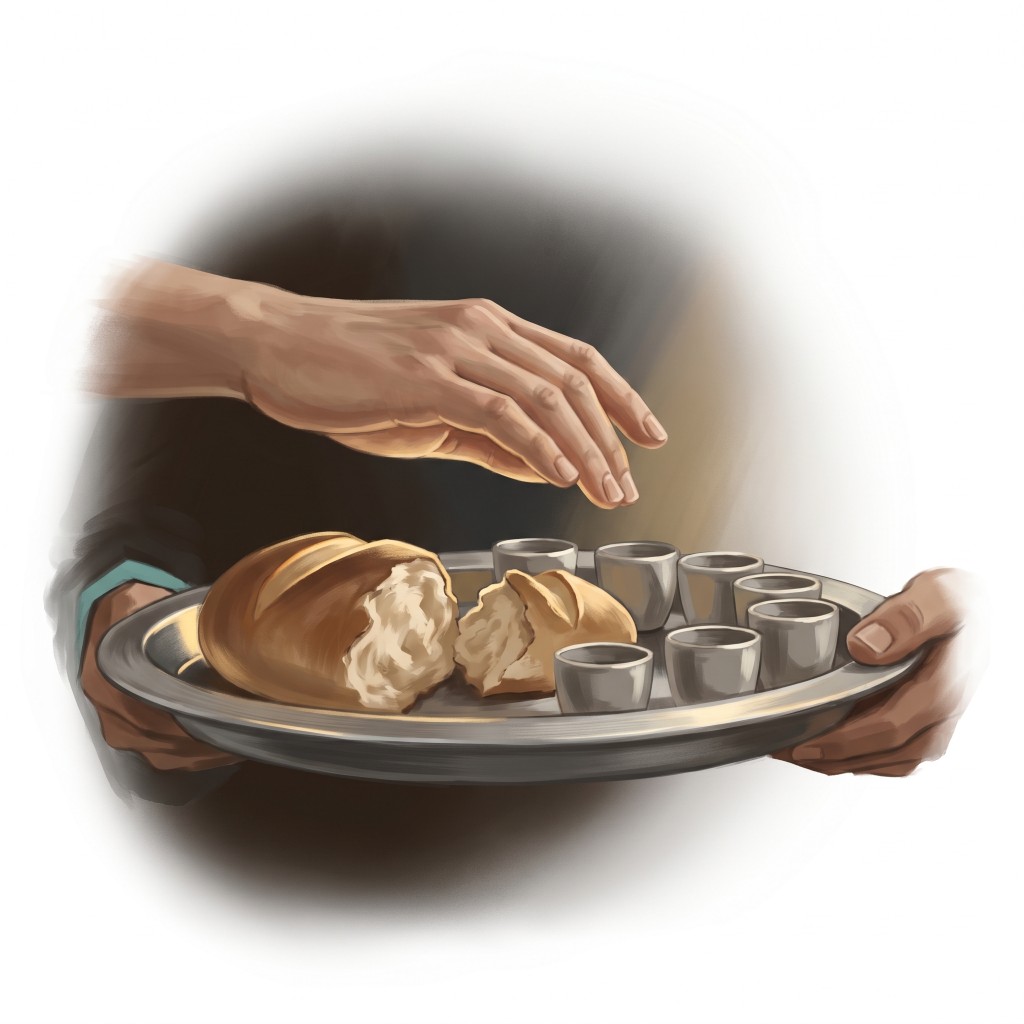
Both are good
Reverence at the table.
1 Corinthians 11:27
Coming as you are.
3 Nephi 18:30
Read the moment
A man has not missed a Sunday in six months. He has been carrying something — not a crime, not an affair, not what the world would call a "big" sin. Just the slow accumulation of a thousand small failures: the temper he can't quite control, the scripture study he keeps starting and stopping, the feeling that he is faking it every time he bears testimony. He wonders if he is getting worse, not better. The tray comes. He takes the bread. He eats it. He doesn't feel a lightning bolt. He doesn't feel forgiven. He feels the same as he did thirty seconds ago. But he came. He took it. He didn't have to prove he was perfect first. He just had to show up and mean it — even if "meaning it" was just I want to want to change, and I'm going to try again this week. That's the covenant. That's all of it.
"Worthiness is not flawlessness. Worthiness is being honest and trying."
— Brother Bradley R. Wilcox (October 2021)
God's Example
Christ served the first sacrament to men about to fail Him catastrophically.
It is the night before the cross. Jesus knows what is coming — not in the abstract, but specifically. Judas will betray Him in hours. Peter will deny Him three times before the rooster crows. Every one of them will scatter when the soldiers arrive. And He serves them the bread. And He serves them the wine. All of them. He did not say "everyone except Judas." He did not say "Peter, sit this one out." He gave it to the room. He gave it to the imperfect, the confused, the soon-to-fail, the terrified, the one who would sell Him for silver. The very first sacrament in the history of the world was served to people who were not worthy of it by any standard we would use today. And Christ served it anyway. That is not an accident. That is the sermon.
Matthew 26:26–28
Bridle it: right time, right place, right person, right reason.
God doesn't approve of either extreme
This is not an excuse. God wants both — reverence that takes the covenant seriously and humility that comes hungry. Bridle this.
Treating the sacrament as a reset button without real intent
Taking the sacrament with deliberate, contemptuous disregard for what it represents — treating it as a reset button you push without any genuine desire to change — is the casualness Paul warned against. If your bishop has counseled you to refrain while you work through something specific, honor that process. That is between you and him and the Lord.
"Whosoever shall eat this bread, and drink this cup of the Lord, unworthily, shall be guilty of the body and blood of the Lord."
— 1 Corinthians 11:27
Refusing the bread because the week was not clean enough
Refuse the bread because your week was not clean enough? Then you have passed the gas station because your car is not clean enough. That is not humility. It is self-sabotage. The very design of the ordinance assumes you came in tired.
"Come unto me, all ye that labour and are heavy laden, and I will give you rest."
— Matthew 11:28
Take the bread. Take the water. Adjust. Come back.